
2026 Awards Winners


The KiwiNet Awards celebrate heroes in research commercialisation — those individuals and organisations whose best practice approach is changing the innovation landscape in New Zealand. We congratulate the 2026 winners!
Momentum Student Entrepreneur Award
This award recognises a highly motivated university student who looks beyond the science and sees the prize - how their idea can change the world. The student is making outstanding contributions to business innovation or has created innovative businesses in New Zealand through technology licencing, start-up creation or by providing expertise to support business innovation.
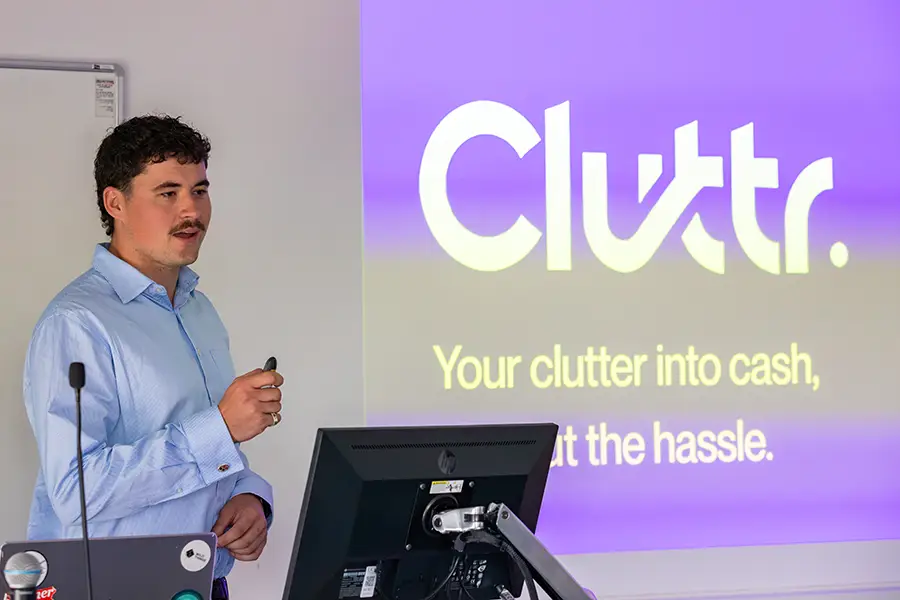
Zac Hemmings: Cluttr / University of Canterbury
Turning household clutter into a business opportunity
Every year, New Zealanders leave thousands of dollars' worth of belongings sitting unused because selling second-hand is considered too much work. Te Whare Wānanga o Waitaha | University of Canterbury Civil Engineering student Zac Hemmings set out to fix this by building Cluttr, a platform that makes selling as easy as calling an Uber.
Rather than starting with funding or a large team, Zac began by becoming Cluttr's first reseller. For the past seven months, he has personally collected items, photographed them, negotiated sales, managed customers, and built the software alongside volunteer developers. Through this hands-on approach, he proved the reseller model with real customers before scaling it through technology.
Cluttr allows customers to scan everything they want to sell in one go. Users upload photos to the platform, which builds an inventory and estimates resale values. Customers can then book a Cluttr reseller from a network of student sole traders mentored by Zac. The reseller collects the items and manages the entire selling process on the customer's behalf. The result is less clutter, more value recovered for households, and fewer usable items ending up in landfill.
Following this year's University of Canterbury Centre for Entrepreneurship (UCE) Summer Startup Programme, where Zac received the Innovation Award, he has continued developing Cluttr through the UCE Incubator Programme while completing his engineering degree. Cluttr has completed paid pilot collections, returned proceeds to customers, won Red Bull Basement New Zealand, and represented New Zealand at the Red Bull Basement World Final in San Francisco.
Zac created Cluttr with a vision greater than decluttering - to give other young people an accessible first step into entrepreneurship. By providing the skills, technology, and opportunity to learn about business through reselling, his ambition is to turn unused belongings into a pathway for others to back themselves.



NZ Product Accelerator Breakthrough Innovator Award
This award recognises an upcoming entrepreneurial researcher who is making outstanding contributions to research commercialisation in New Zealand through technology licencing, start-up creation or commercial partnerships leading to the creation of new products and/or services from publicly-funded research.
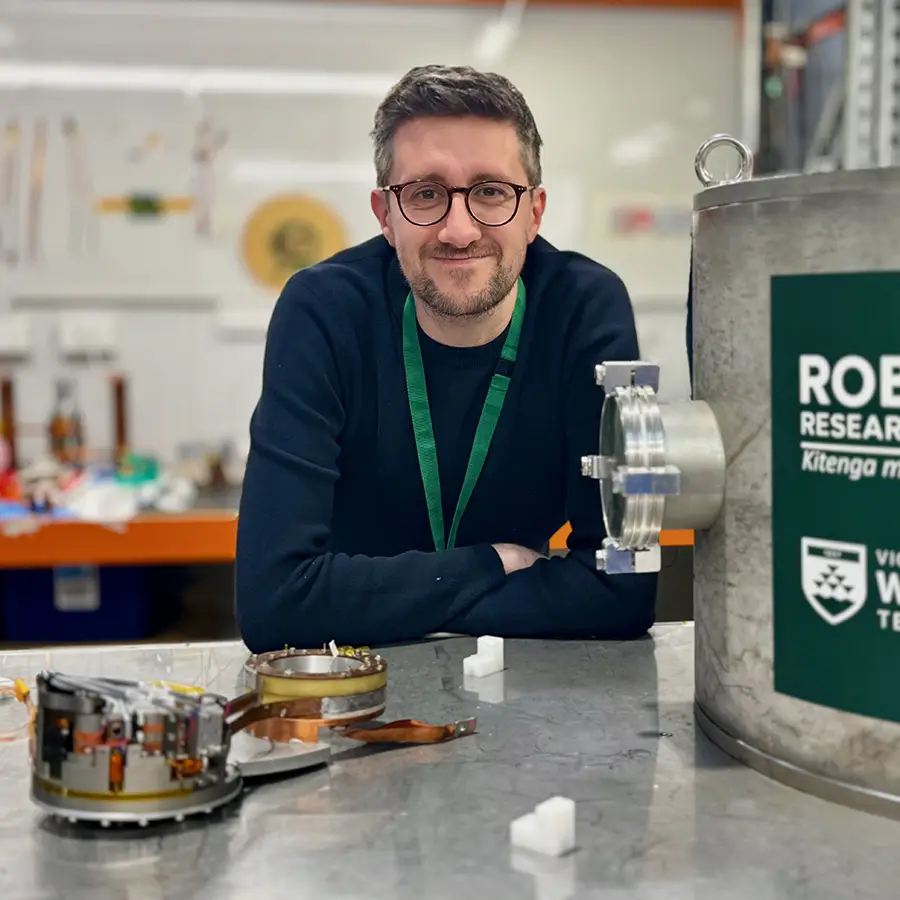
Dr Dominic Moseley – Paihau-Robinson Research Institute
Supercharging the commercialisation of superconductivity
Dr Dominic Moseley is a Senior Scientist at Paihau-Robinson Research Institute at Te Herenga Waka—Victoria University of Wellington, where he has become recognised for tackling the complex engineering challenges that stand between the Institute's world-leading superconductivity research and real-world application.
A major technical hurdle in high-temperature superconducting (HTS) systems is the requirement to operate at very low temperatures while carrying very high currents. Dominic and the team at Paihau-Robinson Research Institute have developed ground-breaking solutions, called flux pumps, to solve this challenge. He has led the translation of this research into practical applications, including fusion energy systems, bespoke scientific instrumentation, and other advanced superconducting platforms.
Through his efforts, Paihau-Robinson has reached several significant commercialisation milestones, including the development and successful testing of the first market-ready flux pump for a European company, as well as partnerships with New Zealand and overseas start-ups for bespoke system development. His research also underpinned the creation of a joint venture to commercialise the technology for marine applications.
Dominic's commercial leadership has been matched with academic recognition, including the awarding of multi-million-dollar funding as the head of Robinson's flux pump team. Through this research, he is developing the next generation of fusion-relevant technologies utilising advanced superconducting materials.
Driven by a desire to see deep-tech companies powering up across New Zealand, Dominic is helping create a path for future innovation-led careers in applied physics, materials science and engineering. And in helping move flux-pump technology from the lab to commercial deployment, Dominic is ensuring New Zealand is uniquely positioned to capture the $34 billion HTS market in the years ahead.

BNZ Researcher Entrepreneur Award
This award recognises an experienced entrepreneurial researcher who consistently delivers real world impact from their research.
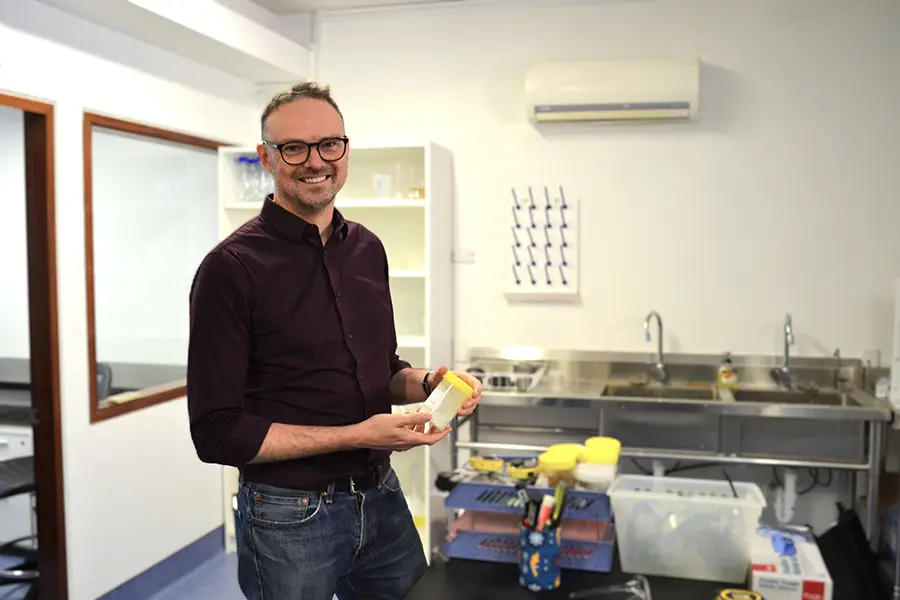
Professor Matthew Watson - University of Canterbury
Driving new industries for a lower-emissions future
Through his research, Matthew Watson, Professor of Chemical and Process Engineering in the Faculty of Engineering at Te Whare Wānanga o Waitaha | University of Canterbury, is advancing solutions to global climate and materials challenges. He works across academia, industry, and startups with a clear goal: to create new technologies that cut emissions, grow New Zealand's economy, and turn research into investable ventures.
Matthew has supported three deep-tech companies to market – NILO, Aspiring Materials and CullBeck – and is currently developing a fourth.
In 2017, he joined NILO, a plastics recycling company that turns waste plastic into wood adhesives. He conducted initial due diligence to secure early investment, led the initial intellectual property strategy, and guided scale-up planning. NILO has employed more than 30 people and operates a commercial demonstration facility in Auckland.
In 2019, he played a hands-on role in shaping the growth of Aspiring Materials, a technology company that takes olivine, a magnesium-rich mineral capable of capturing carbon dioxide (CO₂) and permanently converts it into magnesium carbonate and other valuable, low-carbon products. Aspiring Materials has since raised more than $5 million, hired a team of young engineers and scientists, and gained international recognition through the Breakthrough Energy Fellowship. In late 2025, it opened its first-of-a-kind facility in Bromley, Christchurch, capable of processing 250 kg/day of olivine.
More recently, his research group at the University of Canterbury, in collaboration with Victoria University of Wellington and the Paihau Robinson Research Institute, helped develop a hydrogen-based process that turns iron sands into high-value iron with far lower emissions. Matthew co-founded this spin-out, CullBeck, which raised $20 million in its first investment round in July to commercialise its hydrogen-based ironmaking process.
Alongside his ventures, Matthew builds pathways for others. As a leader of UC's Biomolecular Interaction Centre and Board Member of the Institution of Chemical Engineers, NZ, he mentors engineers, backs early-stage founders, and works closely with venture capital firms to help turn ideas into companies.



KCA Commercialisation Rising Star Award
This award recognises an entrepreneurial early-mid career commercialisation professional working within a New Zealand research organisation who is actively supporting research innovations to generate significant real-world impact.
Dr Dan Carlisle - Massey University & Massey Ventures
A committed champion for early commercialisation professionals
Dr Dan Carlisle is a rising leader in New Zealand's research commercialisation ecosystem, delivering significant impact through his organisation, while championing the profession and creating opportunities for others to succeed.
As Director of Commercialisation & IP at Te Kunenga ki Pūrehuroa Massey University, Dan provides strategic leadership and operational oversight of the University's intellectual property assets and licensing portfolio. In a joint role with Massey Ventures, he leads the commercialisation of approximately 15 technologies across agritech, food and nutrition, animal health, medical devices, and SaaS. He has also overseen more than 20 PreSeed Accelerator Fund (PSAF) Tier 1 and Tier 2 projects during his tenure.
Dan's most significant deal involved negotiating and executing the commercial exit of an agricultural technology, generating a strong financial and strategic outcome for the University and its creators. Beyond individual deals, he is also leading the development of an investment fund to support Massey start-ups and is commercialising his own software product innovation via Massey Ventures.
A defining element of Dan's impact is his commitment to strengthening New Zealand's research commercialisation profession. In 2023, he co-founded Nexus, a nationwide initiative supporting early- and mid-career commercialisation professionals through professional development and peer networking. Since its launch, each annual Nexus Summit has sold out, featured international speakers, and brought together participants from across New Zealand's research and commercialisation ecosystem.
Dan is a prominent voice within the ecosystem, representing Massey on the KiwiNet Pipeline Committee and contributing to the National IP Policy through public commentary, consultation with officials, and by leading the University's strategic response. His drive for professional improvement also saw him recently achieve the Registered Technology Transfer Professional (RTTP) accreditation, an internationally recognised and hard-earned standard for commercialisation professionals.


PwC Breakthrough Project Award
The Breakthrough Project Award is awarded to a project that has recently achieved spin-out, license deal, or major capital raise, and demonstrates best practice commercialisation of publicly funded research.
Scentian Bio – Bioeconomy Science Institute Maiangi Taiao
The future of sensing technology
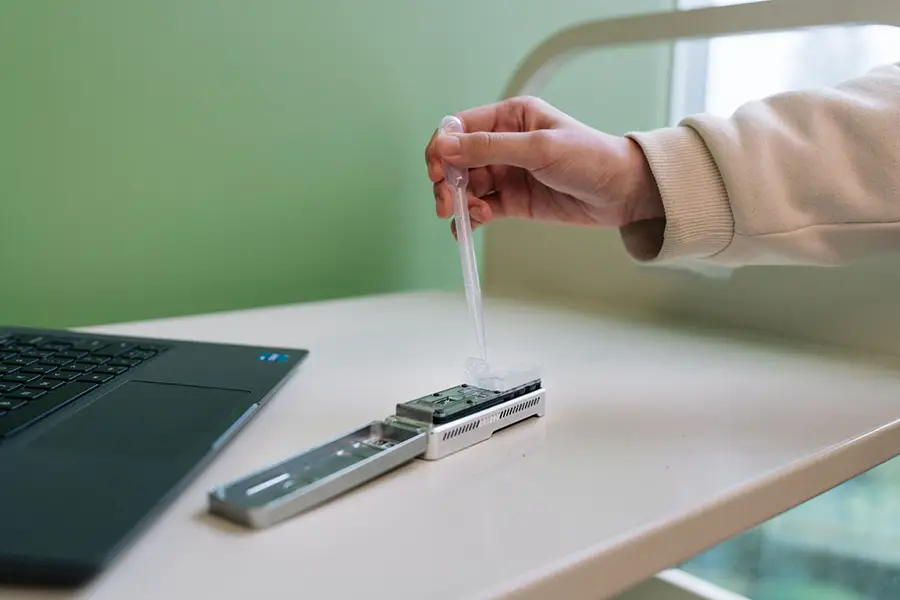
Scentian Bio is commercialising a world first AI-powered 'insect nose on a chip' that could transform not just global food quality control but also biosecurity, pest detection, and human health diagnostics.
All living things produce volatile organic compounds. These biochemical signals are a way to describe the nature and state of the world around us, which is why smell is our fastest sense. Insects have unique receptors that detect these compounds much more sensitively and efficiently, making them perfect for bioelectronics.
Building on 20 years of publicly funded research into insect olfaction and synthetic biology at the Bioeconomy Science Institute Maiangi Taiao, researchers uncovered how to synthetically produce insect receptors that detect biochemical signals in real time with extremely high sensitivity.
Scentian Bio spun out of the Bioeconomy Science Institute in 2021 with this sensing technology - the result of a lengthy and structured commercialisation journey, including early seed funding, technology validation, IP protection and strategic partnerships.
Now with significant international backing – having closed an oversubscribed NZ$7 million pre-Series A round in January 2026 led by Icehouse Ventures – Scentian Bio has pilots underway with seven leading global food companies and is scaling advanced manufacturing in Auckland.
While the company's first market is food quality control, a global industry worth over US$8 billion, it is also building a platform technology that allows new receptors to be layered onto the same core sensing and AI infrastructure, creating future opportunities in other markets. Scentian Bio attracted a US$1.7 million grant from the Gates Foundation to develop a prototype diagnostic for infectious diseases such as TB and malaria.
Scentian Bio's technology means insights can be collected anywhere by anyone and turned into faster, preventive decisions - opening the door to a future global food system without waste and where quality and safety are assured for everyone.


Cytiva Commercialisation Impact Award
The commercialisation impact award celebrates a project delivering outstanding innovation performance and generating significant impact for New Zealand, whether environmental, social, job creation, or direct or indirect impact on export earnings.
C-Dax Pasture Meter – Massey University
Decades of agri-innovation and international impact
Over 20 years ago, researchers at Te Kunenga ki Pūrehuroa Massey University identified a fundamental bottleneck in New Zealand farming - a lack of fast, accurate pasture measurement. Traditional methods were labour intensive and impractical, limiting farmers' ability to make sound decisions and get the most out of their pasture.
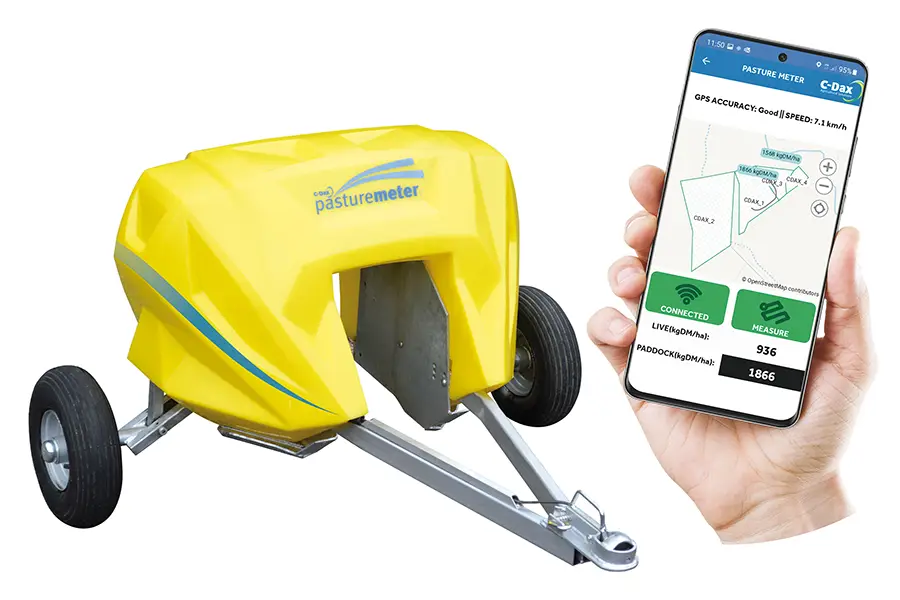
Pasture Meter was invented as a device towed behind a quad bike, using optical sensing technology to measure pasture volume at scale. What might previously take a farmer five hours walking across a 100-hectare farm, Pasture Meter made possible in a 45-minute drive, taking over 200,000 samples per paddock.
Massey University partnered with local agricultural equipment manufacturer C-Dax to commercialise the technology, and the C-Dax Pasture Meter was launched at the 2005 National Fieldays. Over the past two decades, the product has been adopted by farmers across New Zealand and overseas.
The C-Dax Pasture Meter has continued to evolve in response to farmers' needs and operational realities. The platform includes advanced sensor technology connected to a C-Dax Pasture Meter+App with GPS that provides auto paddock recognition.
In 2025, C-Dax joined the Sturli family of brands, and after two decades, Massey University exited its commercial interest in the pasture meter technology. Palmerston North-based farming equipment specialist Sturli continues to develop, manufacture, and sell the C-Dax pasture meters alongside other agricultural solutions. Further development of the Pasture Meter+App and integration with other systems are on the development radar, as are product improvements and enhancements.
An effective solution solving a clear problem, C-Dax Pasture Meter has created a lasting legacy - strengthening New Zealand's global agritech reputation, generating value directly back to the national and local economy with over two decades in sales and export revenue, and supporting skilled jobs in Palmerston North. It also illustrates the widespread impact of a successful 20-year partnership of university-industry collaboration, which has generated significant returns for Massey and the creators. The pasture meter continues to deliver impact for the farmers it was designed to help, and sales remain strong domestically and internationally.


KiwiNet Commercialisation Icon Award, sponsored by Sprout Agritech
This is KiwiNet’s highest honour given to a quintessential champion of New Zealand’s research commercialisation community. This individual has a high level of aspiration for research commercialisation as a catalyst to deliver prosperity for all. This is demonstrated by their unwavering commitment to substantially advancing the cause and activity of commercialisation of publicly funded research within New Zealand. Their body of work has made an outstanding impact on the research commercialisation ecosystem.
Dr Gavin Ross – Commercialisation Leader - Horticulture and Food
Advancing New Zealand biotechnology, venture building and commercialisation
Gavin is a true champion of research commercialisation, creating the conditions for science to make a difference create lasting value for New Zealand. He is known for leading by action – getting involved to make things happen and working alongside others to turn challenges into opportunities.
He joined Plant & Food Research's predecessor, HortResearch, as a research scientist in the late 1990's and was central to establishing genomics research for major horticultural crops -work that is now integral to the Institute's scientific programmes.
From 2010 to 2026, Gavin led Plant & Food Research's intellectual property, business development and technology commercialisation functions. He shaped innovative commercialisation approaches in New Zealand and overseas, including plant-breeding programmes across China, the United States and Europe, and led the early development of the organisation's approach to venture creation. His expertise was also called on during the amalgamation of the Crown Research Institutes, when he led the commercial workstream for the establishment of the Bioeconomy Science Institute.
Gavin has also helped grow the wider ecosystem, developing talented people who now work across the spectrum of venture capital, technology transfer and start-ups, while continuing to mentor founders and support the ventures he helped establish.
A passionate advocate for biotechnology, Gavin chaired NZBIO during a period of severe funding instability and ecosystem fragmentation, guiding it towards integration with the NZ Tech Alliance and its evolution into BioTechNZ. He also served on the KiwiNet Investment Committee for a decade.
Today, Gavin runs his own bio commercialisation consultancy and serves as VP of Research and Innovation at Calocurb and Chief Innovation Officer at Prevar - continuing his legacy of driving high-quality commercialisation outcomes for New Zealand.