
Breakthrough carbon capture tech tackling industrial emissions
15 April 2026
Cleantech company Captivate Technology is bringing cost-effective carbon capture to market with its breakthrough CO2 capture material. Designed to efficiently remove carbon dioxide from industrial emissions and biogas, Captivate’s innovation offers a scalable decarbonisation solution for multiple industries.
Spun out of Massey University in 2022 with support from Massey Ventures and the MacDiarmid Institute, the company has recently taken major steps towards real-world application. Key milestones include closing a $3M seed round, appointing a commercial CEO, and forming a North American partnership for a major carbon capture project in Canada.
Cheaper, more efficient CO2 capture: The technology
At the heart of Captivate’s innovation is a patented metal-organic framework (MOF) material named MUF-16. Co-invented by founder Professor Shane Telfer at Massey University, the sponge-like adsorbent selectively sieves CO2 from emission sources.
“What makes this technology exciting is that it dramatically reduces the energy use and cost of carbon capture. That opens the door for industries to cut emissions in a way that’s practical and scalable,” says Lauren Salisbury, CEO of Captivate Technology.

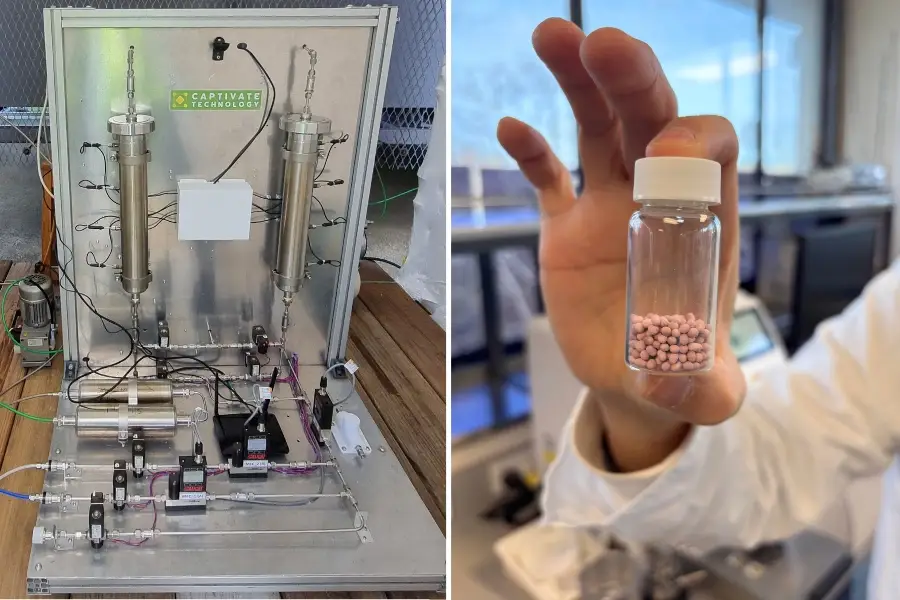
CEO Lauren Salisbury with Captivate’s patented MUF-16 pellets.
Designed to easily integrate within standard plant equipment, the technology can be applied across industries including cement, steel, natural gas, biomass combustion and biogas. Once captured, the carbon can either be safely stored or recycled for other uses.
From lab to market: The commercialisation journey
Captivate’s journey from lab to market has been led by Massey Ventures, supported by the MacDiarmid Institute and backed by PreSeed Accelerator Funding from KiwiNet.
The project secured $112,100 in PreSeed, matched internally by Massey Ventures, which was crucial for early development, IP protection, market validation, and investor engagement.
Key milestones in the commercialisation journey included securing a patent for the MUF-16 material, spinning out the company in 2022, and raising $750,000 in a pre-seed round in 2023.
“By definition, deep tech companies are built on research that has taken many years and Captivate is no exception,” says Mark Cleaver, CEO of Massey Ventures.
“Conversations with founder Shane Telfer continued over the years until the right opportunity emerged to use a MOF to solve a significant global problem. Building and maintaining these local relationships is one of the most important things we do as a technology transfer company.”
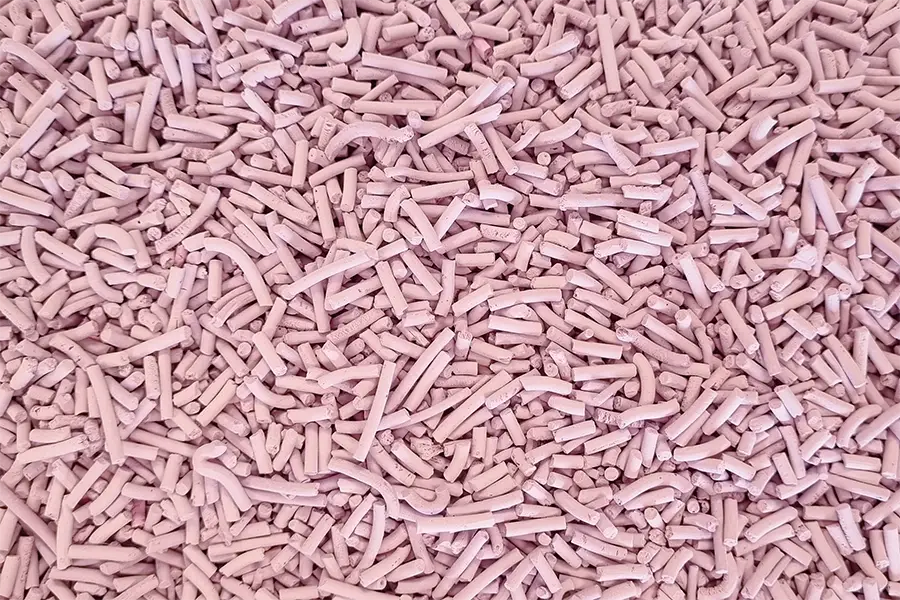
Captivate Technology’s sponge-like pellets.
A series of pilot trials across New Zealand tested the technology in different industrial contexts, from cement plants to geothermal sites and landfill gas operations. In a world-first demonstration, the team also tested carbon capture on a gas turbine with Contact Energy in Taranaki.
Insights from these trials helped refine Captivate’s commercial focus. The company has now prioritised biogas as the fastest path to market in North America and Europe, where carbon capture can help operators upgrade raw biogas into biomethane — a renewable fuel with growing global demand.
Momentum accelerated in early 2026 when Captivate closed a $3M seed round led by WNT Ventures, with other investors including New Zealand Growth Capital Partners, K1W1, Impact Ventures and Uush Capital. The investment is enabling the company to advance pilot deployments and build the commercial and operational capability needed to scale internationally.
Next steps: Scaling globally
In an exciting step towards demonstrating viability at scale, Captivate has recently announced a North American partnership with Cielo Carbon Solutions and CarbonQuest that will see its tech deployed in a natural gas facility in Canada.
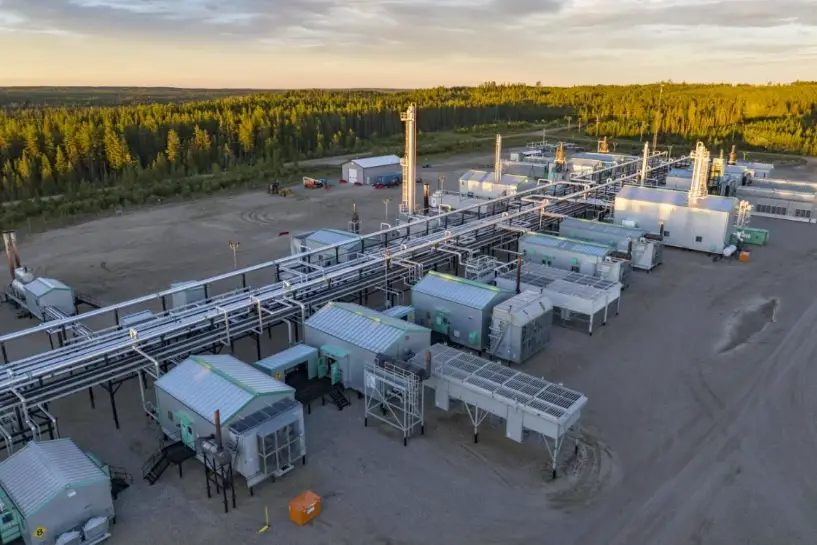
Tourmaline Oil Corp’s Banshee gas site in Alberta, Canada.
The project will be piloted at Tourmaline Oil Corp’s Banshee gas site and aims to capture approximately four tonnes of CO2 per day, which will then be recompressed and sequestered on-site.
“Canada is a hotbed for the oil and gas sector, and demonstrating our technology successfully there will be a key proof point for scaling our impact globally. Commercial-scale pilots like this project are the key to unlocking the full potential of our technology and proving its reliability to global partners,” says Salisbury.
“Our next steps are the biogas markets in the US and Europe. In the US alone, the renewable natural gas (RNG) sector has seen explosive growth, while Europe currently leads the world in biogas plant density with over 19,000 active sites.”
Backed by new investment and international partnerships, Captivate is now moving towards global application — positioning Captivate to deliver economic and environmental benefits for New Zealand and the world.
Impact at a glance
- $112,100 PreSeed Accelerator Funding supported early-stage development
- Up to 70% reduction in energy required for carbon capture
- $3.75M capital raised to date
- Canadian pilot project set to capture ~4 tonnes of CO₂ per day